Developing workplaces that connecttrustcollaborateadaptperform
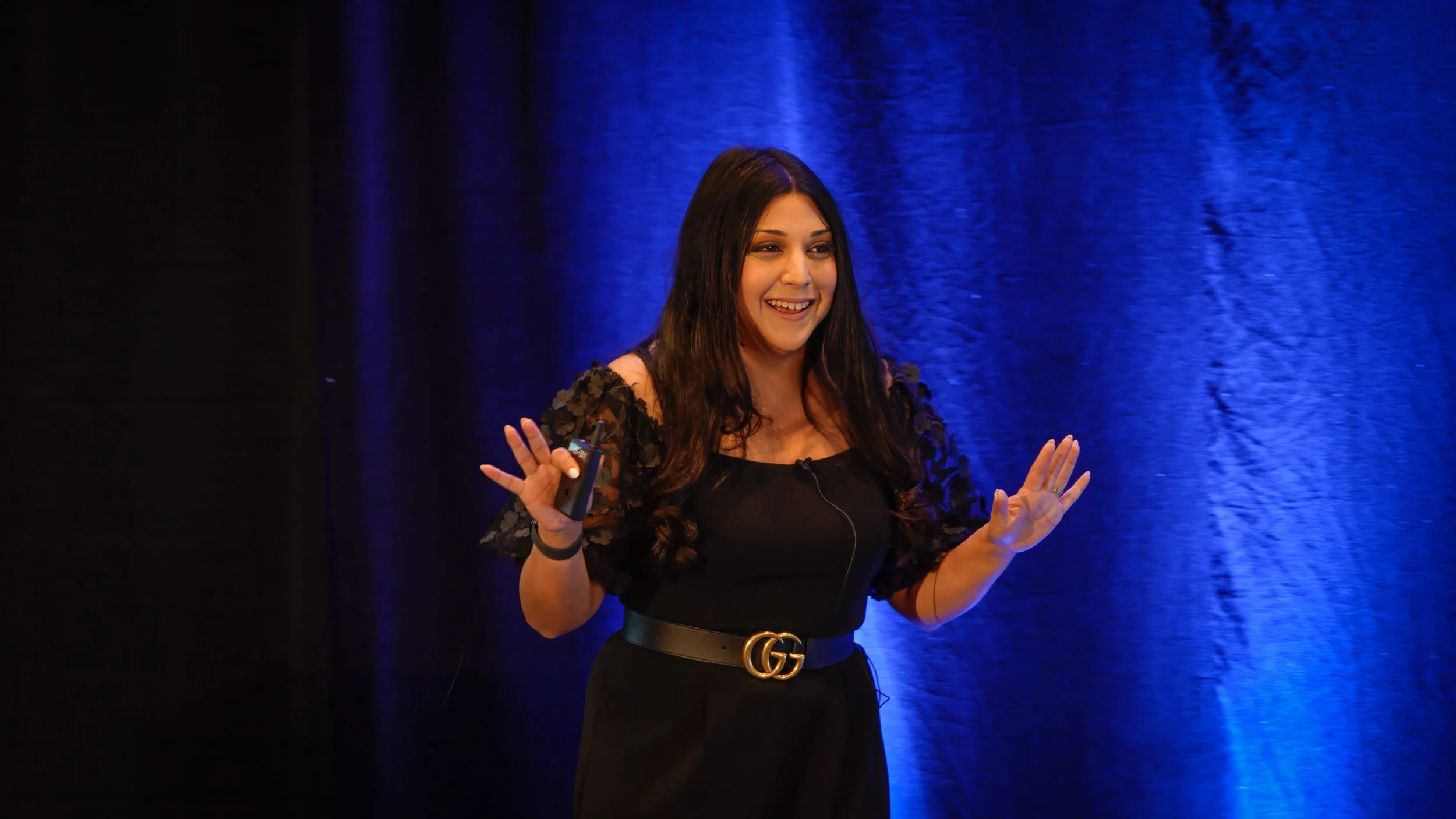
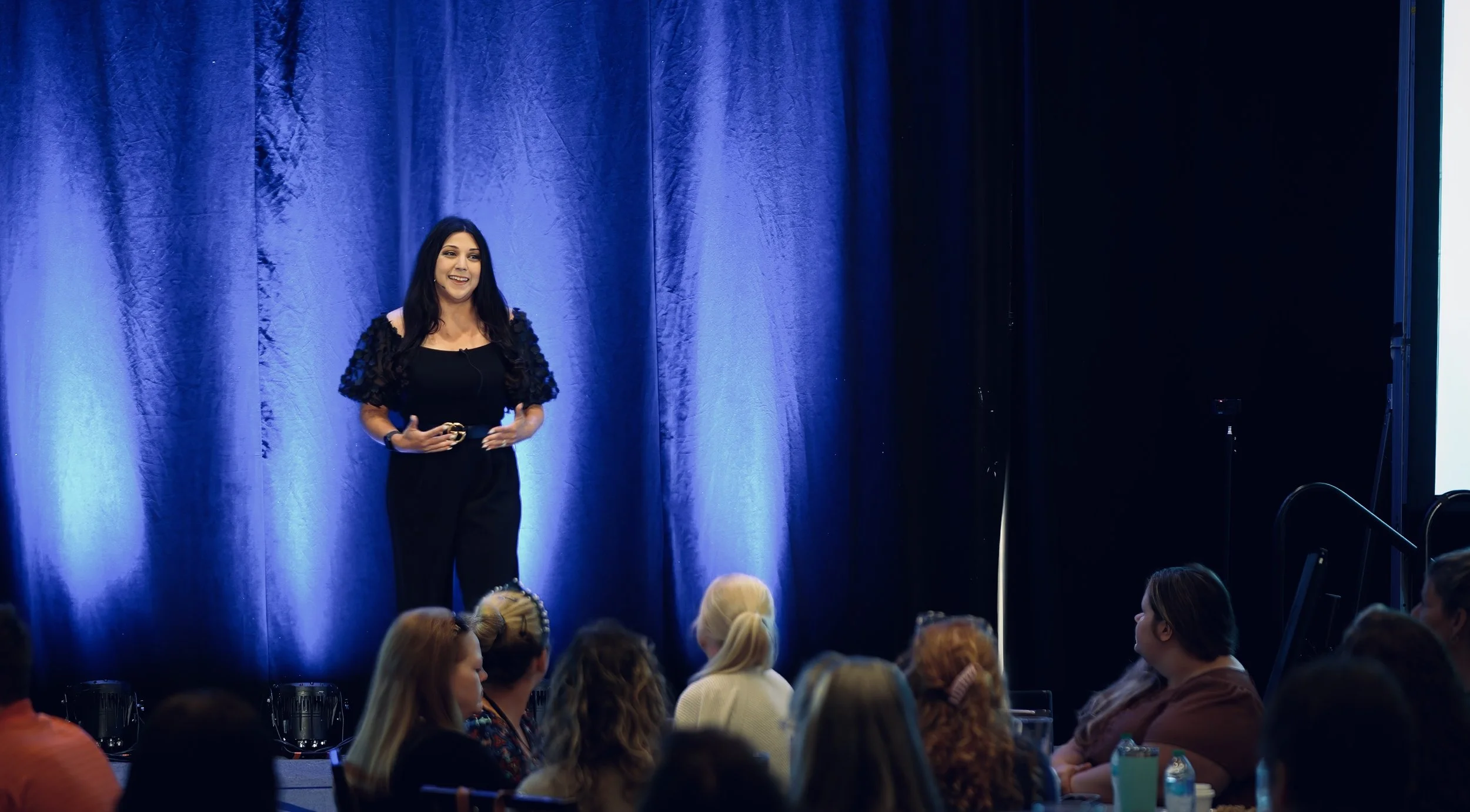
Keynote speaker and author shaping the future of work and wellbeing by cultivating a culture of connection, collaboration, and camaraderie.
In the age of AI, the future of
work is human.
Partnerships



















Nidhi fosters wellbeing.
Wellbeing promotes
performance.

As a highly sought after wellbeing and work culture speaker who applies her thirteen years of experience as a licensed therapist to the work world, Nidhi supports organizations in enhancing trust, relationships, and team work in a rapidly evolving landscape filled with change, uncertainty, and stress. This increases job satisfaction, productivity, revenue, wellbeing, and collaboration.
Keynotes
-
Even though we’re constantly connected through our devices, everyone is feeling more disconnected, stressed, and lonely than ever before. Over 50% of employees would forgo a 10% pay increase to feel more connected at work, highlighting how meaningful ties are what people desire.
With AI transforming the way we work, it is clear that our approach cannot be man vs. machine—it must be man AND machine. We can outsource data analytics, project proposal composition, and content creation to AI, but AI can’t replace the day-to-day interactions and ability to connect human-to-human. The best investment we can make right now for the future of work is in our people.
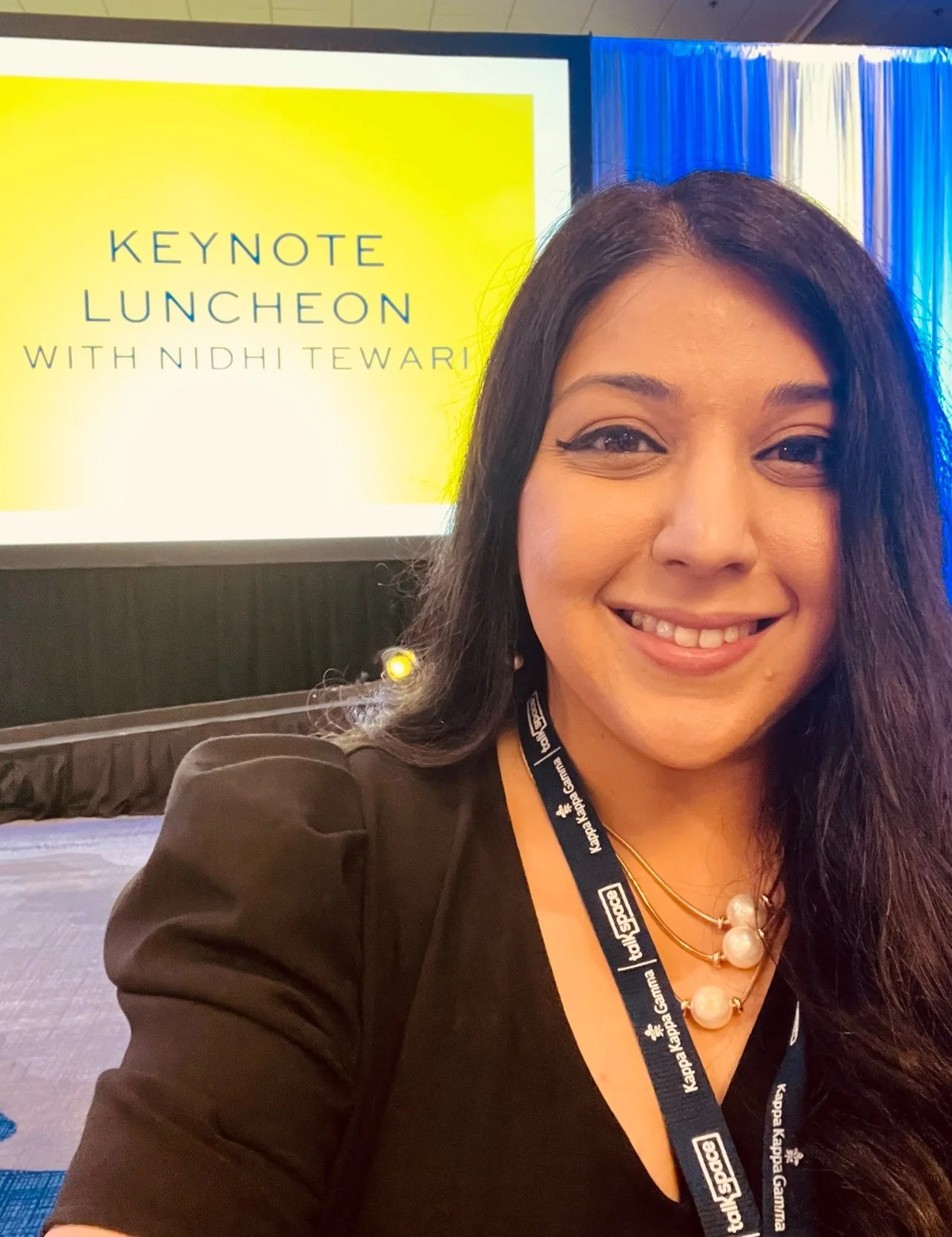
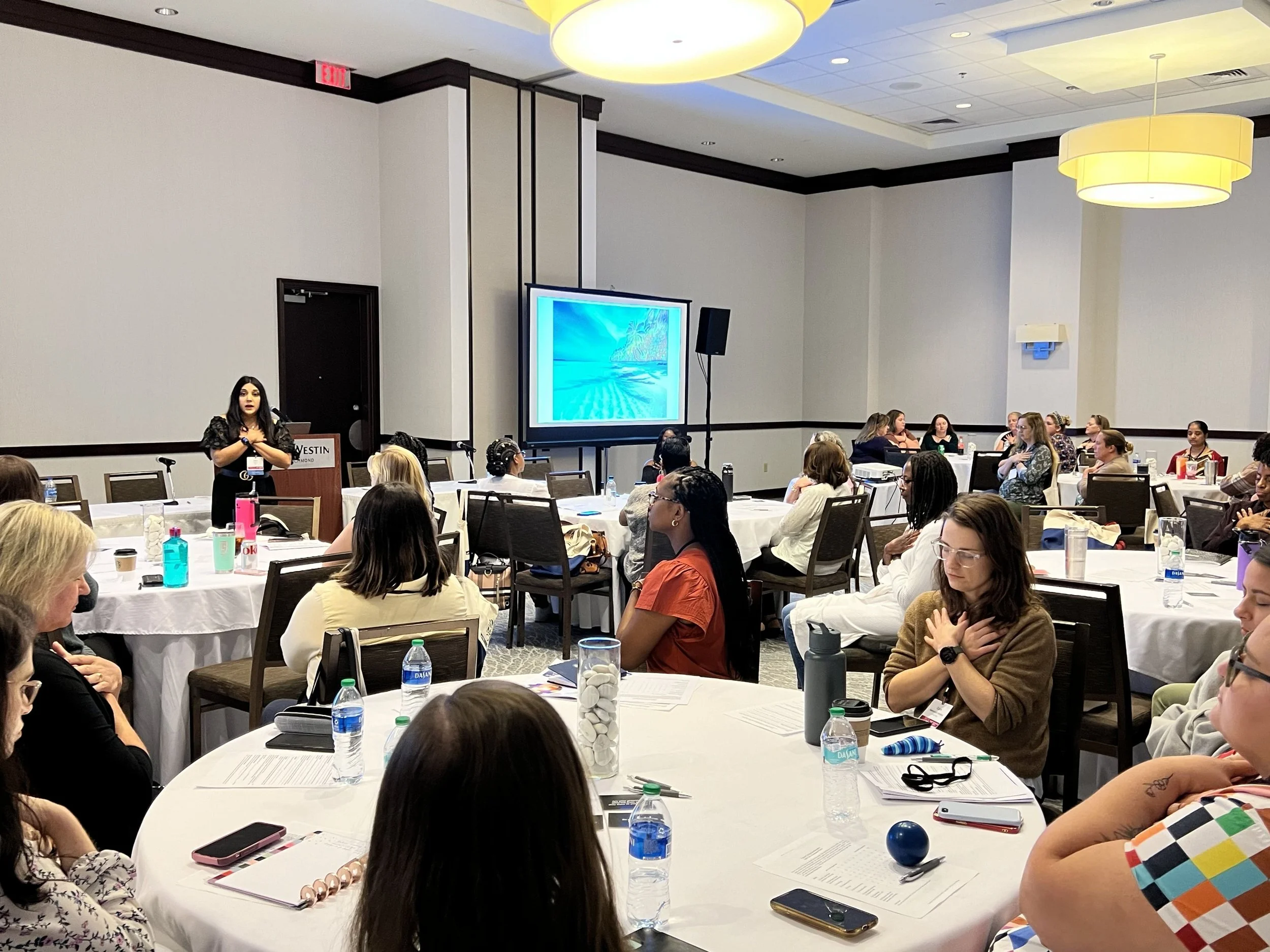
In this keynote, Nidhi Tewari, LCSW shares science-backed strategies for how leaders and teams can foster deeper connection, supercharge performance, and build resilience in an ever-evolving work landscape by focusing on relationship building with teams, leaders, and clients.
Nidhi addresses how we must first become more in tune with ourselves so that we can then become in tune with others. She demonstrates how to manage stress and difficult emotions with her RESET technique, she encourages self-reflection on communication misses and discusses how to connect better with her Fixers, Avoiders, Connectors, and Explorers (FACE) framework, and she teaches the specific language of connection and relationship repair with her CHECK-IN approach.
In this engaging, inspiring, and practical talk, Nidhi incorporates hands on interpersonal exercises, real-time practice, and an individualized connection plan to demonstrate how relationship building is a skill that anyone can learn. Nidhi shows us that the quality of our interpersonal relationships at work is a key differentiator between good and great workplaces, and that an investment in the way we connect is the most important investment we can make.
Key Attendee Takeaways:
Learn about the science of becoming in tune with yourself and in tune with others in order to foster greater connection, collaboration, and camaraderie.
Identify Connection Gaps between colleagues and teams, and learn the 4 attunement skills to bridge these gaps (Flexibility, Reading Cues, Self-Regulation, Collaboration).
Develop actionable skills to embrace curiosity, empathy, compassion, and support in the workplace while still maintaining boundaries.
Understand the nuances of conversations with neurotypical versus neurodivergent team members and how to adapt the way we connect to meet individual needs.
Create a practical toolkit that people at every level of your organization, including employees, managers, and leaders, can utilize to create a more fulfilled, productive, connected, and engaged culture.
-
In a world of constant change, there's a critical skill to cultivate: resilience. 64% of employees report feeling overwhelmed by the pace of change, and 68% would like to receive more support in weathering these changes. We are feeling disoriented and apprehensive about what the future holds, and we need to help people to feel equipped with the skills to handle the shifts to come.
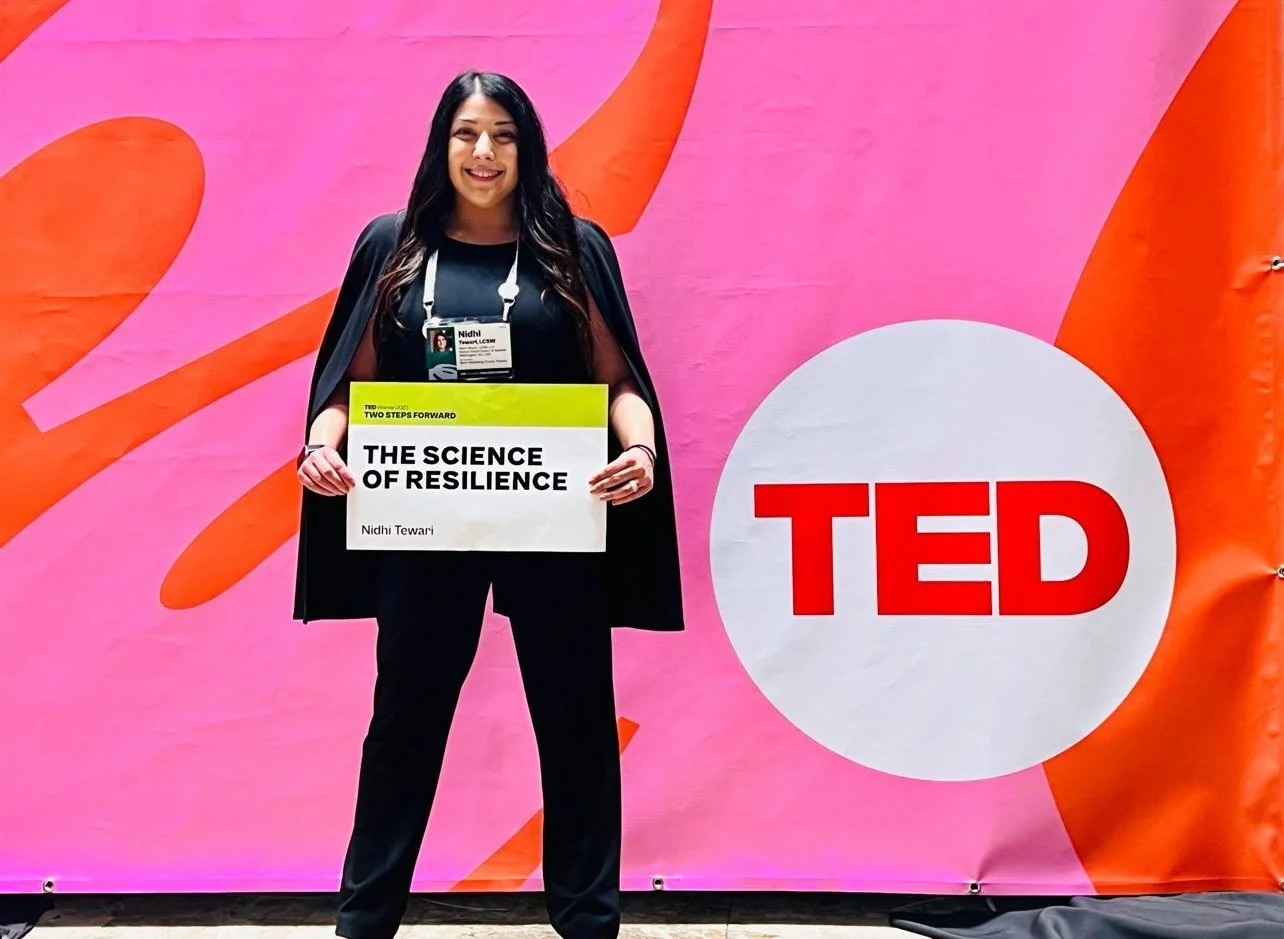
In this session originally presented at TEDWomen and TEDNext, resilience expert and licensed therapist, Nidhi Tewari, LCSW, leads us through an engaging, participatory session in which we develop a research-backed toolkit for improving our innate resilience in order to tackle whatever life throws our way.
We will do a deep dive into the four dimensions of resilience: emotional, mental, physical, and spiritual. Nidhi will teach the skills to navigate emotional overwhelm, share techniques to move beyond surface level conversations and forge deeper relationships, improve awareness of the mind-body connection, and explore the values that inform how fulfilled we feel in and out of work.
Key Attendee Takeaways:
Develop 3 emotional regulation and stress management skills, including 4-7-8 breathing, butterfly tapping to foster emotional resilience, and attunement skills to become in tune our inner and outer worlds.
Learn to embrace vulnerability while building community, and strengthen our mental resilience by enhancing empathy and listening skills in order to build trust and rapport.
Connect more deeply with our physical resilience by noticing the interplay between mind and body, observing somatic experiences, and releasing physical stress.
Hone spiritual resilience by exploring our values, discovering incongruencies, and identifying actionable steps for living our lives in greater alignment.
Identify 3 concrete ways to apply these resilience skills in our day-to-day work and personal lives.
-
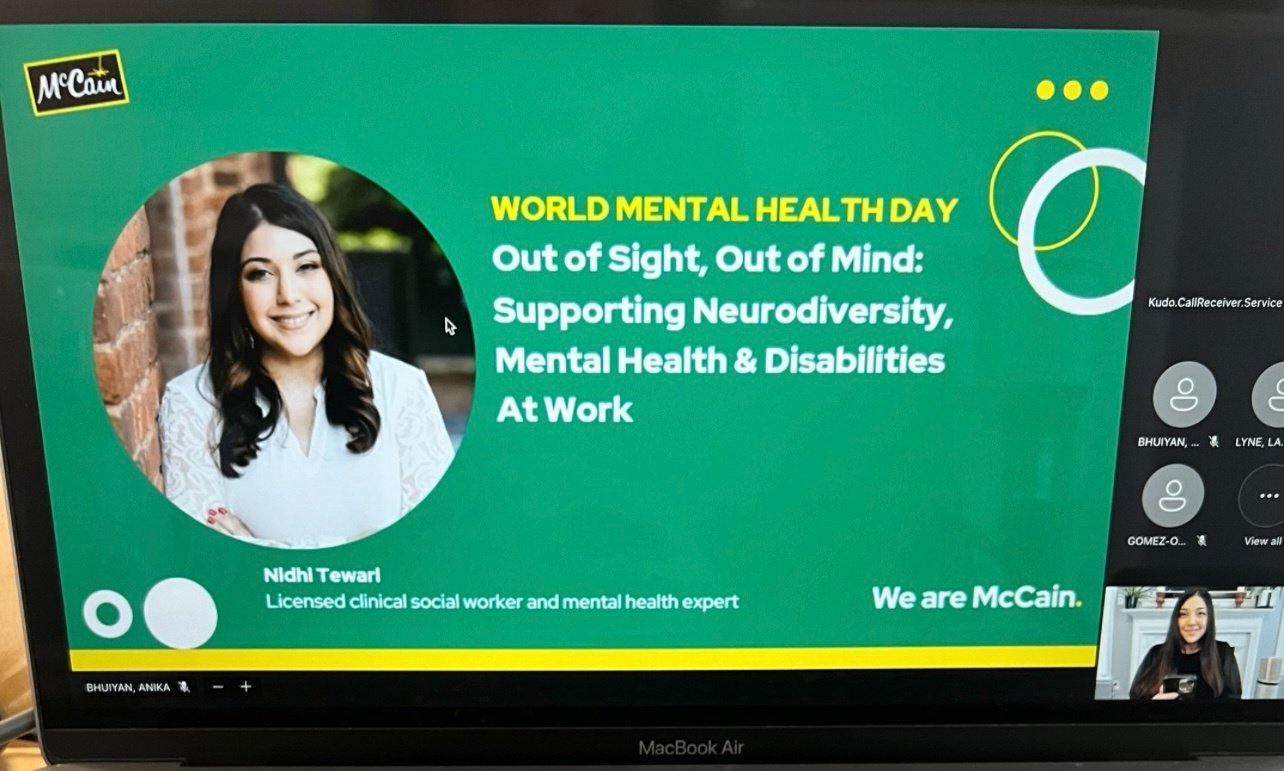
More than 20% of the workforce identifies as having a mental health condition or being neurodivergent, and managers, leaders, and teams are on the frontlines of supporting wellbeing in the workplace. But it can be difficult to know what types of assistance may be the most helpful. Mental health conditions, high stress levels, and other challenges that are unseen, require a mental health informed approach.
In this relatable and actionable talk, Nidhi Tewari, LCSW teaches how to recognize the signs that our mental health or a colleague’s mental health is being impacted, how to engage in a meaningful dialogue to build connection while maintaining boundaries, and how to become in tune to adapt responses to meet the unique needs of each team member.
Key Attendee Takeaways:
Learn tangible signs of how depression, anxiety, trauma, ADHD, chronic pain, and other conditions present in the workplace.
Cultivate an understanding of how to maintain emotional boundaries while supporting ourselves and our colleagues. We can normalize and validate experiences without becoming someone’s therapist.
Develop self-awareness about how our internal experiences impact interpersonal interactions, and practice 3 techniques for shifting our language, tone of voice, and demeanor.
Challenge the narrative that self-care is selfish or earned by identifying impeding core beliefs. We’ll discuss tangible ways to take care based on the 7 types of self-care, and review stress management skills.
Explore the specific language for engaging with colleagues in a way that embraces curiosity, empathy, and understanding.
-
Burnout is cited as one of the leading causes for employees leaving the workforce, with over 42% of employees resigning because they’re burned out. Yet it can be a challenging issue for organizations to address. This is because burnout is complex and requires flexible solutions that address both individual and systemic factors.
Nidhi will teach the skills to cope with burnout, while shedding light on how organizations can shift workplace culture to promote positive mental health and wellbeing. She will help us to recognize our own warning signs of burnout, understand the impact that stress has on our minds and bodies, teach leaders the kinds of supports that thwart burnout, and aid in creating individualized self-care plans.
Key Attendee Takeaways:
Solidify our understanding of the dimensions of burnout, and how to know if we or our teams are experiencing burnout.
Learn about the impact of stress on the mind and body, as well as how fight, flight, freeze, fawn responses affect our capacity to cope in and out of work.
Delineate both the systemic and individual factors contributing to burnout so that the root causes can be resolved, creating long lasting change.
Explore underlying beliefs contributing to a lack of boundaries or inability to engage in proper self-care, and begin challenging and reframing these narratives.
Employ interventions to eliminate burnout, including adjusting load management, developing an individualized plan that includes coping mechanisms and self-care techniques, and reconnecting to passion and purpose.
Testimonials
-
![]()
“Nidhi explains key emotional intelligence skills that can help learners overcome the obstacles stopping them from success at work. Additionally, she also covers ways to build a mindset that is realistic and optimistic while facing challenges.”
- Linkedin
-
![]()
"AH-MAZING! This was such an excellent and important presentation…you had the audience HOOKED!"
- National Speakers Association
-
![]()
“I highly recommend Nidhi for any speaking engagement. She is not only an engaging and knowledgeable speaker, but also a passionate advocate for cultivating healthier and more compassionate work cultures.”
- Molson Coors Beverage Company
-
![]()
“Nidhi’s empathetic approach encourages people to be more conscious.”
- Godiva
-
![]()
“The knowledge, expertise, and experience she brings to the podium is unmatched…Nidhi’s keynote resonated in ways that people are still talking about today.”
- Kappa Kappa Gamma




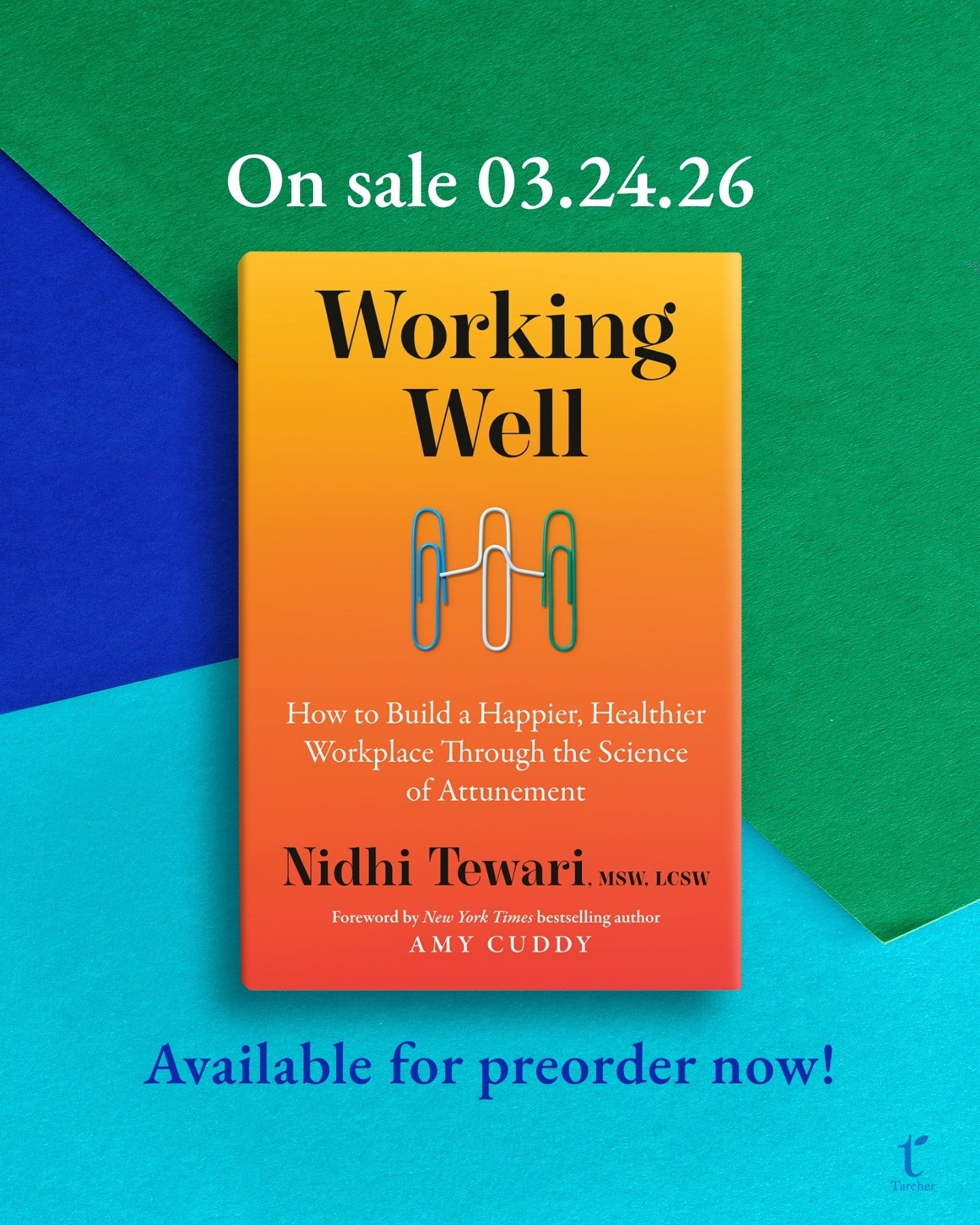
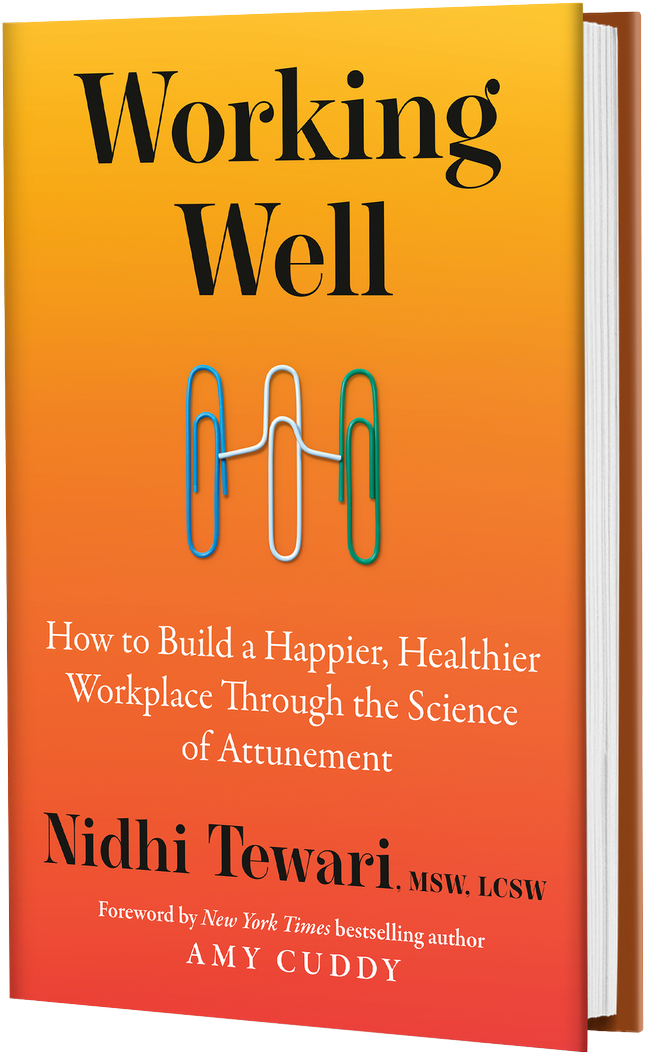
Working Well:
How to Build a Happier, Healthier Workplace Through the Science of Attunement
Contrary to popular belief, it is actually not possible to completely compartmentalize your personal and work personas. In this thoroughly researched and practical guide, workplace culture expert Nidhi Tewari, LCSW takes readers through the latest science on attunement, or how to work in sync with your teams—because a thriving workforce can only be built upon a compassionate work environment that acknowledges and accounts for people’s personal lives.
Working Well will give professionals the tools to set healthy boundaries, negotiate difficult conversations, plan compassionate strategies for when personal struggles affect professional spaces, and help professionals at all levels improve their work lives.
An essential toolkit for when the boundaries between work and life inevitably blur.
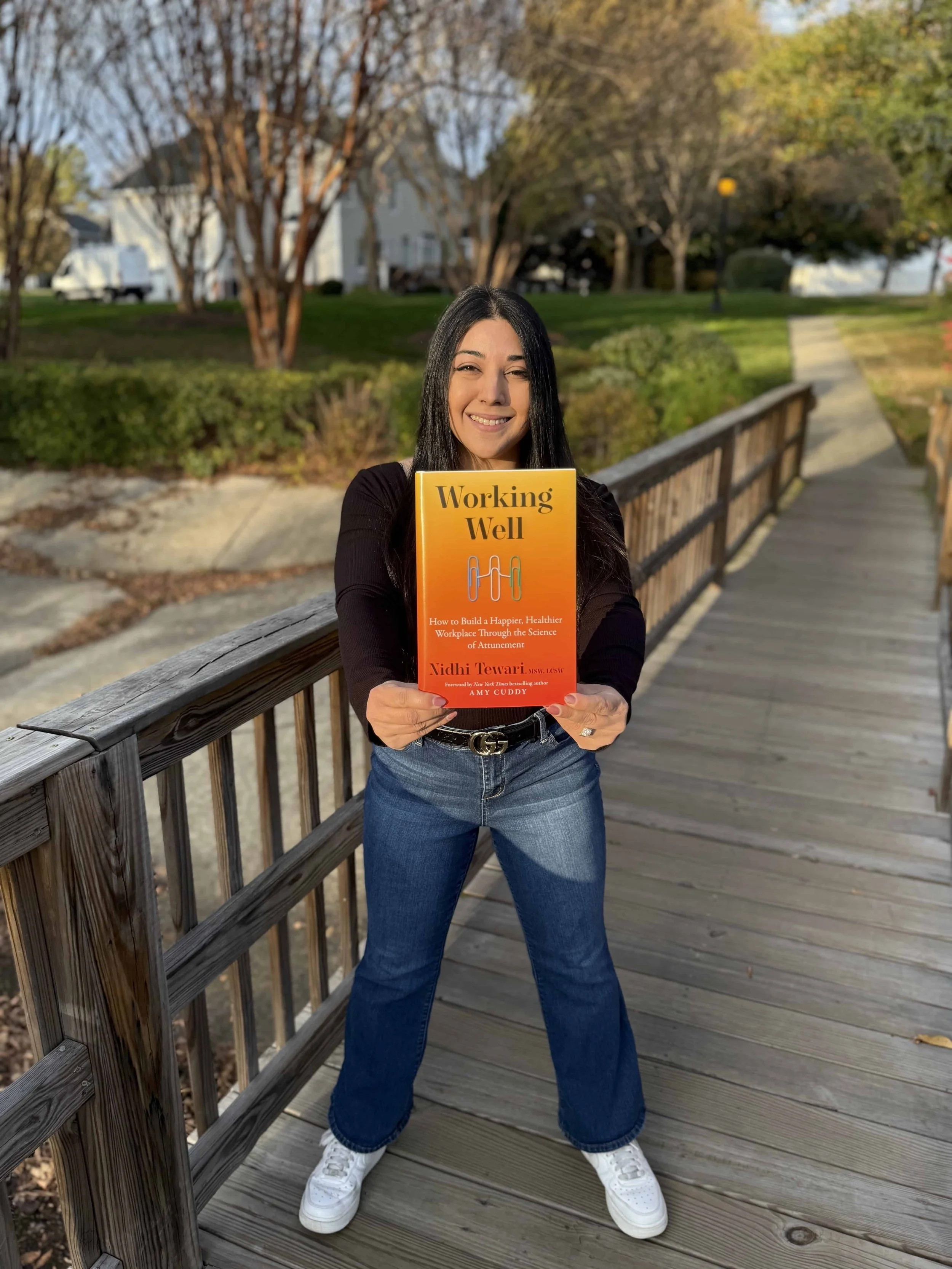
In this essential read, you will:
Deepen self-awareness by exploring how your past shapes present interactions
Build emotional regulation through targeted exercises
Identify and bridge Connection Gaps in your workplace relationships
Navigate communication across neurotypical and neurodivergent perspectives
Apply the CHECK-IN framework to repair and strengthen team dynamics
Whether you’re a leader or team member, Working Well will transform how you build connections at work. It’s time to start fueling your success and well-being and move from surviving to thriving.
“Working Well is a powerful reminder that empathy and connection aren’t soft skills—they’re essential ones. Nidhi blends personal experience and clinical insight to show leaders how attunement can transform both workplaces and people’s lives. This book doesn’t just teach you how to lead better—it shows you how to see, hear, and support others in ways that create lasting trust and belonging."
- Dr. Marshall Goldsmith
Thinkers50 #1 Executive Coach and New York Times bestselling author of The Earned Life, Triggers, and What Got You Here Won’t Get You There
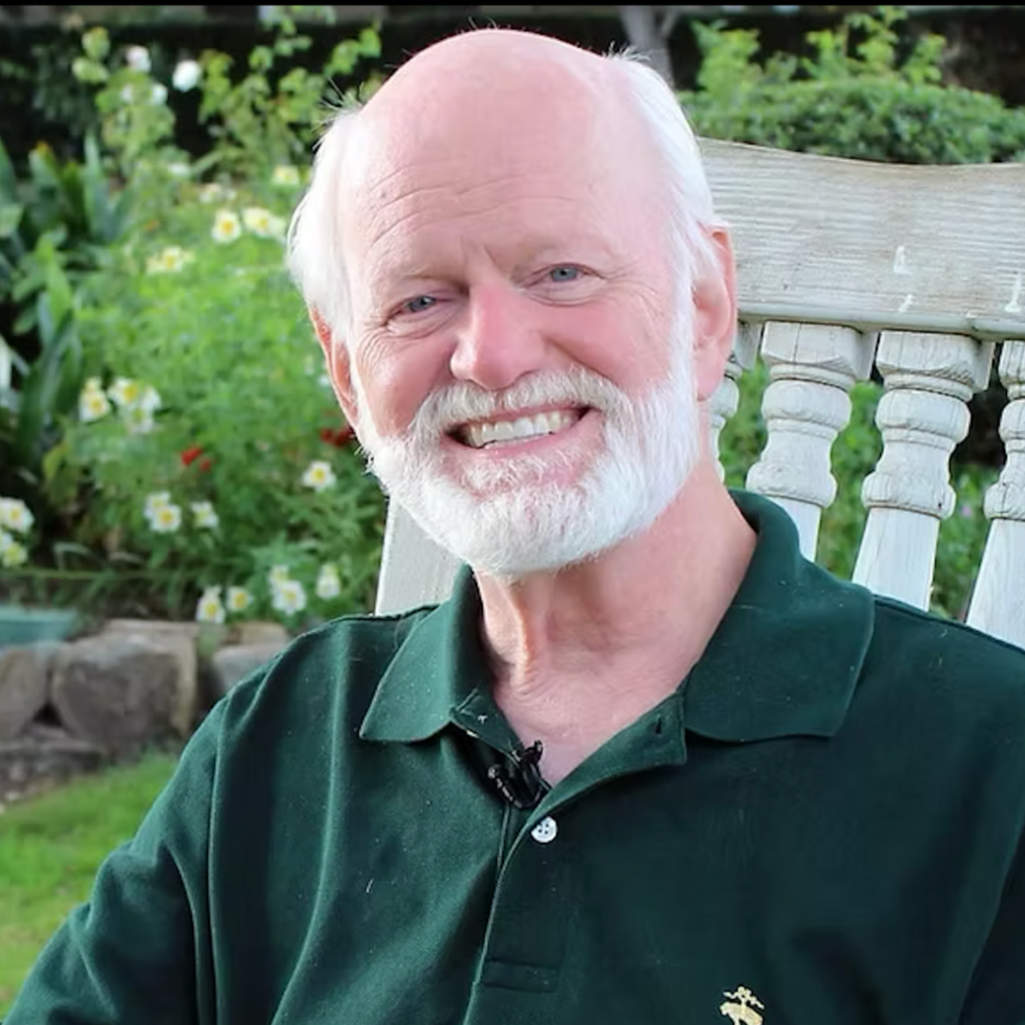
“Whether you’re a leader, a teammate, or someone just trying to hold it together while you do your job and live your life, Nidhi understands what that feels like— and she knows what actually helps. She knows that what most of us want is to feel safe enough to speak up, grounded enough to stay present, and connected enough to trust the people around us. And she knows that those things don’t happen by accident. They happen when we practice attunement.”
- Dr. Amy Cuddy
New York Times bestselling author of Presence, and viral TED talker, “Your Body Language May Shape Who You Are”

Articles
-

What Is Chronic Stress? Definition, Symptoms And Treatment
-

How to Fight Right - in a Pandemic or After
-

Why this Stage of the Pandemic makes us so Anxious
-

What Is EMDR, the Therapy Prince Harry Gets On-Camera in The Me You Can’t See?
-

8 Lasting Changes Experts Think We'll See In Kids After This 'Lost' Year
-
My idea for a new era: The town hall from TED2022

Let’s Talk
Interested in working together? Fill out some info and we will be in touch shortly!